
Oak Kitchen Cabinets: A Designer’s Guide to Plain Sawn, Standard Oak, and Rift White Oak
Because "I want oak cabinets" isn't specific enough (and could cost you thousands)
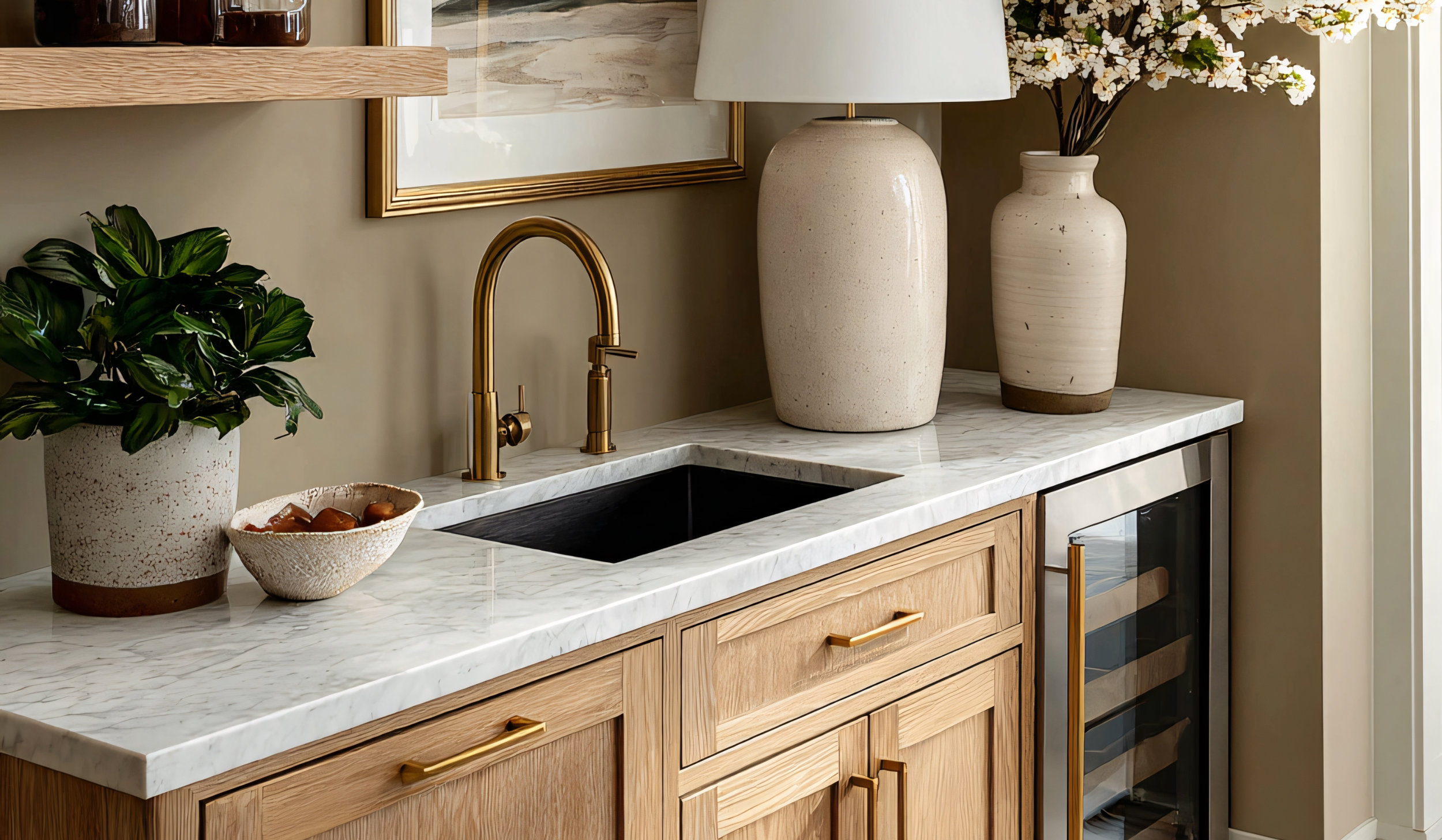
You tell your cabinet maker you want oak, and they nod like that was helpful. Then they ask, "Which kind?" and suddenly you're staring at three samples that all look like wood but also... completely different? 🫠
Here's what most homeowners don't realize until they're mid-renovation: oak kitchen cabinets come in multiple varieties, and the distinctions between them aren't just aesthetic. They affect price, style, and whether your kitchen feels collected and intentional or slightly... off.
When you tell your cabinet maker, "I want oak," they're going to ask you which kind. Plain sawn? Standard? Rift? And if you don't know the difference, you might end up with cabinets that look nothing like your inspiration photos (or cost way more than you budgeted for).
Let's break down the three main types of oak kitchen cabinets so you can walk into your next meeting prepared, confident, and clear about exactly what you want.
Plain Sawn Oak Cabinets: The Drama Queen with Big Cathedral Vibes
Plain sawn oak is the one with personality. Big, swooping cathedrals. Lots of movement. The kind of grain pattern that makes a statement before you even add hardware.
This is the oak your grandma probably had in her kitchen, but here's the thing: it's having a moment again. When done right, plain sawn oak cabinets bring warmth, character, and a lived-in feel that works beautifully in traditional, farmhouse, and even some transitional kitchens.
What makes plain sawn oak unique:
Large cathedral patterns that create visual drama across each cabinet door
More variation from board to board, which adds to the handcrafted, collected look
Traditional feel that pairs beautifully with butcher block counters, apron front sinks, and vintage-inspired hardware
When plain sawn oak works best:
In homes with architectural character (think Craftsman bungalows, farmhouses, or older homes with original details)
When you want warmth and texture without going full rustic
Paired with natural materials like stone, wood floors, and linen textiles
DESIGN TIP:
If you're going with plain sawn oak, lean into the grain. Don't fight it with overly modern finishes or sleek, minimalist hardware. Instead, let the wood be the star and choose complementary materials that feel just as organic.
Standard Oak: The Goldilocks Option
Standard oak sits right in the middle. The cathedrals are there, but they're tighter, more controlled, and a little less dramatic than plain sawn. If plain sawn oak is the extrovert, standard oak is the reliable friend who shows up on time and never causes a scene.
This is a great option if you love the warmth of oak kitchen cabinet colors but don't want the bold, sweeping grain of plain sawn. It still reads as traditional, but it's a bit more refined.
What makes standard oak unique:
Tighter grain patterns that create a cohesive, consistent look
Versatile enough to work in both traditional and transitional spaces
Takes stain more evenly than plain sawn, which can be a plus if you're going for a darker finish
When standard oak works best:
In kitchens that lean traditional but aren't trying to recreate a farmhouse
When you want wood warmth without competing with other design elements
If you're planning to stain your cabinets and want a more uniform color payoff
DESIGN TIP:
Standard oak is your chameleon. Pair it with marble counters and brass hardware for a classic look, or go with concrete and matte black fixtures for something more modern. It adapts.
Rift White Oak Cabinets: The Clean-Line Luxury Option
Now we're talking. Rift white oak cabinets are the ones everyone's asking for right now, and for good reason. This is the oak that feels elevated, modern, and effortlessly chic.
Unlike plain sawn and standard oak, rift white oak doesn't have those big cathedral patterns. Instead, you get fine, straight grain lines that create texture without drama. It's subtle. It's sophisticated. And it's definitely the most expensive of the three.
What makes rift white oak cabinets unique:
No cathedrals, just clean, straight grain lines
Consistent appearance across all cabinet doors (no wild variation)
Modern, luxury vibe that works in contemporary, Scandinavian, and transitional kitchens
Higher price point due to the cutting process (more wood is wasted to achieve that straight grain)
When rift white oak works best:
In modern or transitional kitchens, where you want warmth without rustic vibes
Paired with sleek countertops like marble, quartz, or concrete
When you want your cabinetry to feel like an investment piece, not a trend
DESIGN TIP:
Rift white oak cabinets look stunning with minimal hardware (think simple pulls or even push-to-open doors). The grain is subtle enough that it doesn't need much competition. Let it breathe.
How Oak Kitchen Cabinet Colors Change with Stain
Here's something most people don't think about until it's too late: the type of oak you choose completely changes how stain looks on your cabinets.
Plain sawn oak, with all those dramatic cathedrals, shows a lot of contrast when stained. The grain soaks up color differently than the surrounding wood, which can create a really rich, dimensional look. But if you're going for something super uniform, that variation might drive you crazy.
Standard oak takes stain more evenly, which is why it's a safe bet for darker finishes. You'll still see the grain, but it won't have the high-contrast drama of plain sawn.
Rift white oak cabinets, on the other hand, look incredible in a natural or light finish. The straight grain creates just enough texture to keep things interesting without competing with the rest of your design. If you're planning to stain rift oak dark, just know that you're covering up a lot of what makes it special (and expensive).
DESIGN TIP:
If you love the look of rift white oak but want to save some budget, consider using it only on your most visible cabinets (like the island or the cabinets flanking your range) and standard oak everywhere else. Most people won't notice the difference, and you'll save thousands.
📖 RELATED: Once you've chosen your oak type, don't skip the finish decision. Check out my post on Kitchen Cabinet Finish Tips from a Designer: Why I Use Factory-Finished in Every Project to understand why the finish matters just as much as the wood itself.
Questions to Ask Your Cabinet Maker Before You Order
Here's where things get practical. When you're ready to order oak kitchen cabinets, don't just say "I want oak" and hope for the best. Ask these questions:
What type of oak is this? (Plain sawn, standard, or rift?)
Can I see a full cabinet door sample? (Not just a 3x3 inch chip.)
What's the price difference between the oak types you offer?
How much variation should I expect from door to door?
Is this domestic or imported oak? (It affects lead time and sometimes quality.)
What finish options work best with this grain pattern?
The more specific you are upfront, the fewer surprises you'll have when your cabinets show up.
📖 RELATED: Before you finalize your oak cabinet order, read Kitchen Cabinet Renovation: 5 Must-Ask Questions for Your Cabinet Maker (Before You Sign Anything). It covers the construction details and hidden costs that apply to any cabinet material, not just oak.
Wrapping It Up: Choosing the Right Oak Kitchen Cabinets for Your Home
At the end of the day, the "right" oak isn't about what's trending on Instagram. It's about what fits your home, your style, and your budget.
Plain sawn oak brings warmth and drama. Standard oak is versatile and dependable. Rift white oak cabinets are clean, modern, and undeniably luxe.
The key is knowing what you're asking for before you walk into that showroom. Because "I want oak kitchen cabinets" isn't enough anymore. Now you know exactly which one you want (and why).
Your Next Step: Don't Let Cabinet Mistakes Derail Your Budget
Choosing the right oak is just one piece of the puzzle. Before you finalize anything, make sure you're not falling into the most common cabinet traps that homeowners face during a kitchen renovation on a budget.
⚡Grab my FREE guide→ Kitchen Renovation on a Budget: Top 7 Mistakes to Avoid When Choosing Kitchen Cabinets
It's packed with practical tips on layout, finishes, and hardware, while exposing all those sneaky hidden costs, so you can make confident decisions without blowing your budget or regretting your choices six months in.