
Slab vs. Tile Backsplash for Kitchen: Which Should You Choose?
When the slab is right, when it's a cop-out, and when tile wins every time
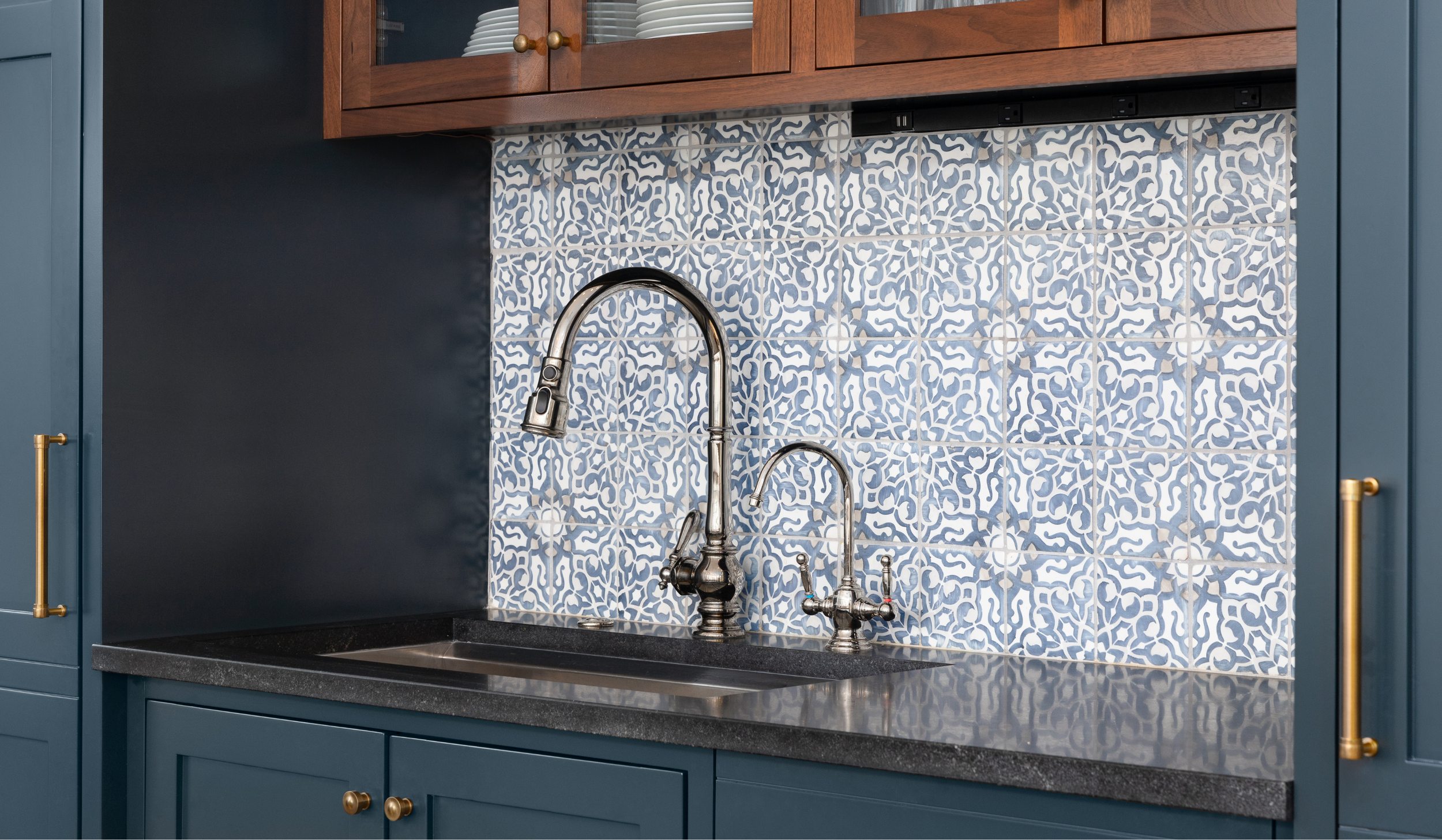
Let's talk about tile backsplash for kitchen design. Specifically, that moment when you're neck-deep in renovation decisions and someone asks you to pick one more thing.
You've already chosen:
Cabinets ✓
Counters ✓
Flooring ✓
Hardware ✓
Paint colors ✓
And now you're supposed to pick a backsplash too?
That's when the slab backsplash starts looking really appealing. Just extend the countertop up the wall. Done. No tile shopping. No grout color debates. No decision fatigue.
Here's my take: I'm not anti-slab backsplash. I'm anti-slab-backsplash-by-default.
A slab backsplash can be gorgeous when it's the right choice for your kitchen. But when it becomes the automatic fallback because you're tired of making decisions? That's a missed opportunity. The right tile backsplash for kitchen spaces adds warmth, texture, and personality that a slab just can't deliver.
Let's walk through when each option actually makes sense (and when one is just the path of least resistance).
What Is a Slab Backsplash?
A slab backsplash means extending your countertop material (usually quartz or marble) up the wall behind the counters. No grout lines. No seams. Just a seamless transition from counter to wall.
It's clean. Modern. Minimal. And in the right kitchen, it can be stunning.
The key phrase there? In the right kitchen.
When Slab Backsplash Is the Right Choice
In Very Modern Kitchens
If your kitchen is leaning full modern (sleek cabinets, minimal hardware, clean lines), a slab backsplash might be exactly what the space needs. Seamless surfaces are the design intention. The countertop material is the star. Any tile backsplash for kitchen walls would compete with the minimal aesthetic.
When the Countertop Is the Hero Material
If you've chosen a dramatically veined marble slab, extending it as a full backsplash can be breathtaking. The continuation of the material creates a cohesive, gallery-like effect.
This works when the countertop is truly special. Not "nice quartz." I'm talking show-stopping stone that deserves to be the focal point.
📖 RELATED: Wondering if your countertop is dramatic enough to work as a slab backsplash? Check out Bold Marble Countertops: 3 Statement Stones That Steal the Show to see examples of marble that's special enough to carry the wall and kitchen backsplash ideas for pairing with statement stone.
In Low-Profile Kitchens
Some kitchens have minimal backsplash space between the counter and upper cabinets. Maybe 8-10 inches max. In that situation, a slab backsplash in a small area can look more finished than tile.
Especially in kitchens where the upper cabinets sit low, there's just not enough wall space for tile to make an impact. A slab feels intentional instead of cramped.
With Very Busy Cabinet Fronts
If your cabinetry has significant detail (beaded inset doors, V-groove panels, heavy natural wood grain), a slab backsplash provides visual relief. The absence of tile pattern is a deliberate design choice that lets the cabinets breathe.
Kitchen Backsplash Ideas: When Slab Is the Easy Way Out
When You've Chosen a Subtle Countertop
A soft, minimal quartz extended as a slab backsplash creates a flat, one-dimensional result. If the countertop isn't dramatic enough to carry the wall, a slab backsplash feels unfinished.
This is where kitchen backsplash ideas in tile would add the dimension and interest the space is missing.
When the Kitchen Needs Texture and Warmth
Kitchens with painted cabinets and quartz counters often feel cold without a tile backsplash for kitchen warmth. The slab adds nothing. Tile adds everything.
Think about it: white cabinets + white quartz counters + white quartz slab backsplash = a very expensive dentist's office vibe.
When You're Choosing It to Avoid the Decision
This is the most honest reason people choose a slab backsplash: it's easier to extend the countertop than to sift through kitchen backsplash ideas and pick tile.
If this is your reason, it's worth taking a little more time to explore your options. The backsplash is one of the most visible elements in your kitchen. You're going to see it every single day.
When Budget Is Cited as the Reason
Here's the thing: slab backsplash material is often not cheaper than tile. The same quartz used for counters is expensive. Many beautiful tile options for kitchen backsplash cost the same or less.
Labor is where the cost difference appears. Slab is faster to install than detailed tile work. But "faster" and "cheaper" aren't always the same thing, and neither necessarily means "better."
Tile Backsplash for Kitchen: When Tile Is Always the Better Choice
Traditional and Transitional Kitchens
Slab backsplash reads as very modern. If your kitchen style is traditional or transitional, tile is almost always the better choice. A slab in a traditional kitchen feels out of place, like wearing sneakers with a ball gown.
Kitchens With Open Upper Shelving or No Upper Cabinets
When more backsplash is visible (because you don't have upper cabinets covering it), tile provides a beautiful, textured backdrop. This is where kitchen backsplash ideas really shine.
A large expanse of slab can feel stark. Tile gives you pattern, texture, and visual interest.
Kitchens That Need Warmth
Tile adds texture, pattern, and personality that a slab backsplash can't provide. Whether it's natural stone, hand-painted tile, or glass, tile brings warmth to the space in a way that flat quartz simply can't.
If your kitchen already feels cold or clinical, a tile backsplash for kitchen warmth is the fix.
Behind the Range Specifically
Even if you're considering a slab backsplash everywhere else, the area behind the range deserves special treatment. This is the most visible focal point in your kitchen.
A tile feature behind the range (zellige, natural stone mosaic, hand-painted tile) is one of the most impactful design moments in a kitchen. It's where personality lives.
📖 RELATED: Once you've decided on a tile backsplash for kitchen walls, don't forget about the finishing details. Read Kitchen Renovation Reality Check: 5 Details Homeowners Always Overlook to learn about tile trim, outlet covers, and other sneaky details that make or break your backsplash installation.
Kitchen Backsplash Ideas: The Hybrid Approach
You don't have to choose between slab backsplash and tile for the entire kitchen. Many designers (myself included) use both:
Slab backsplash on the main counter runs: Quick, seamless, easy to clean.
Feature tile behind the range: Adds personality where it counts most.
This hybrid approach gives you the best of both worlds. The practical benefits of a slab backsplash on work surfaces, and the visual impact of a tile backsplash for kitchen focal points.
How to Make the Decision: Slab Backsplash vs. Tile Backsplash for Kitchen
Ask yourself these questions:
Is my kitchen modern, transitional, or traditional?Modern leans slab. Traditional and transitional lean tile.
Is my countertop dramatic enough to carry the wall?If yes, slab might work. If no, tile is safer.
Do I want my kitchen to feel minimal or collected?Minimal = slab. Collected = tile.
Am I choosing slab because it's right for my kitchen, or because I can't decide?Be honest with yourself here. If it's the latter, keep looking at kitchen backsplash ideas.
DESIGN TIP:
When exploring kitchen backsplash ideas, request large samples. A 4x4 inch tile sample doesn't give you a true sense of how the tile will look installed. Ask for at least a 12x12 section, and look at it in your actual kitchen lighting.
Wrapping It Up: Tile Backsplash for Kitchen or Slab?
A slab backsplash can be a beautiful, intentional choice. Or it can be a default. Know which one you're making before you commit.
If you're choosing a slab backsplash because it genuinely fits your modern aesthetic and your countertop material is special enough to carry the wall, go for it. But if you're choosing it because you're overwhelmed by kitchen backsplash ideas and just want the decision over with, take a breath. Give yourself permission to explore tile options.
The right tile backsplash for kitchen spaces brings warmth, texture, and personality. It's the difference between a kitchen that feels finished and one that feels flat.
You've got this. And if you need help deciding, that's what designers are for.
Your Next Step: The Mistake-Proof Guide for Cabinet Decisions
Cabinet mistakes are sneaky. They hide until you actually start using your kitchen. That's when you realize your trash pullout hits the dishwasher door. Or your drawers are too shallow for your dishes. Or your gorgeous dark cabinets show every fingerprint and you have small children. Fun times.
Grab this free guide and learn:
✔️ The 7 design mistakes that cause the most post-install regret
✔️ How to spot spacing, finish, and functionality issues early
✔️ What questions to ask before anything gets ordered
⚡ Grab My FREE guide→ Kitchen Renovation on a Budget: Top 7 Mistakes to Avoid When Choosing Kitchen Cabinets
Think of it as insurance for your sanity.

About Taylor Ferrell: Central Coast Kitchen Design
Taylor Ferrell is the designer and CEO of Salt Kitchen & Bath, a Central Coast kitchen designer helping homeowners create kitchens that work beautifully for real life. From her San Luis Obispo studio, Taylor guides clients through the tricky decisions (like slab backsplash vs. tile backsplash for kitchen spaces) that make or break a renovation. When she's not coaching clients through backsplash choices, you can find her hunting down the perfect zellige tile or debating grout colors with anyone who will listen.