
A plain-language cheat sheet for when the flooring rep starts talking in acronyms
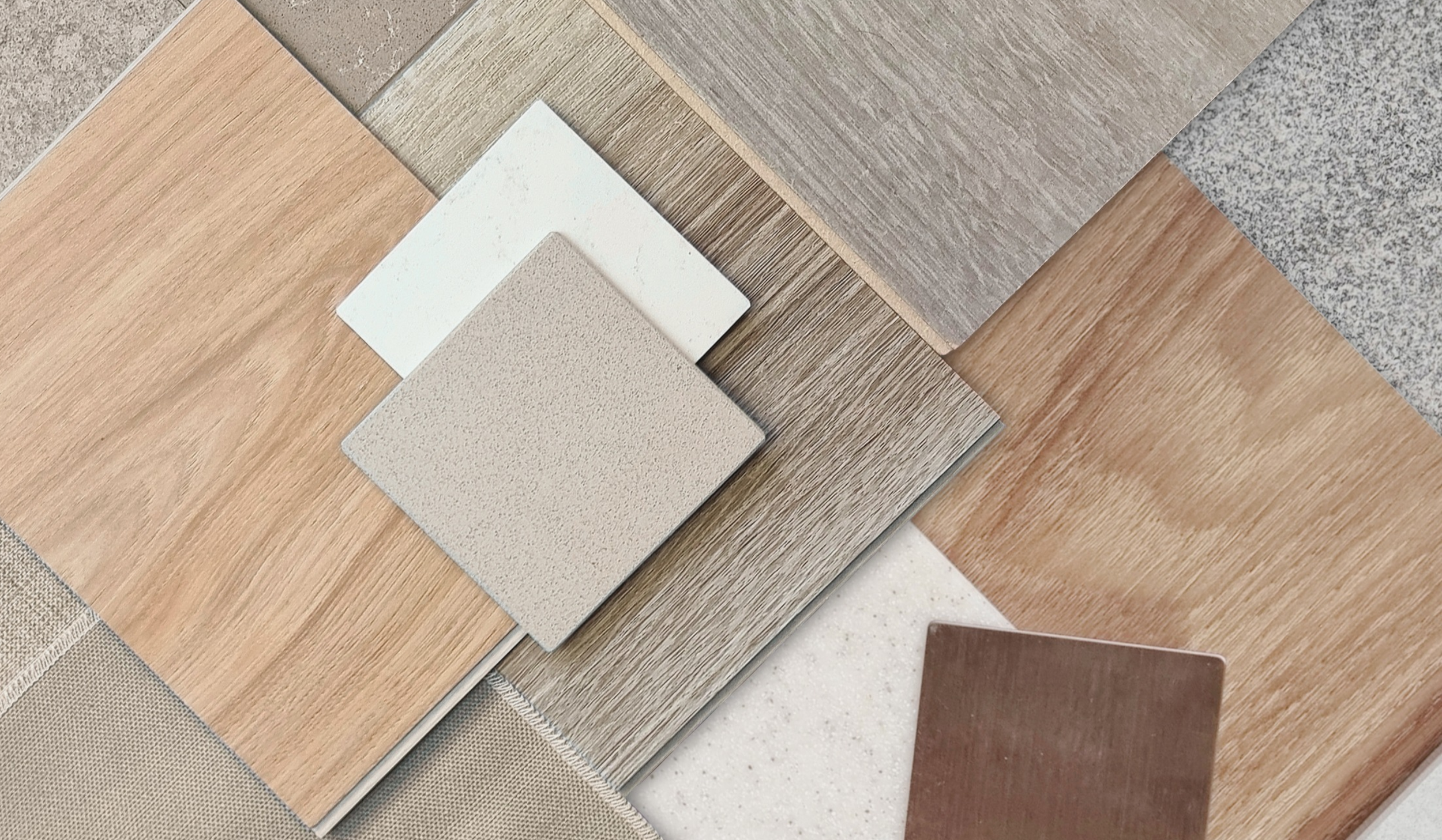
Laminate vs vinyl floor is one of the most common comparisons homeowners search for, and honestly, one of the most confusing. Toss in solid hardwood, engineered wood, HDF, MDF, and plywood, and picking a floor starts to feel like a vocabulary quiz you didn’t study for.
Most of us have heard every one of these terms. Very few of us could define them without Googling. (Zero judgment. I had to learn them too.)
I recently broke them all down in an Instagram reel, and this article is the longer, save-worthy version. I’ll cover:
→ What each material is actually made of
→ Where it does its best work
→ And why none of them is automatically good or bad
These are the exact interior design tips I’d give you if we were flipping through samples together.
Let’s get into it!
Laminate vs Vinyl Floor: What’s Actually Different
These two get lumped together constantly because they’re both trying to look like wood. Under the surface, they’re built very differently.
Laminate is a printed decorative layer (basically a very convincing photo of wood) sealed on top of a composite core, usually HDF. It’s hard, scratch-resistant, and budget-friendly. Its weak spot is water. If moisture sneaks into the seams, that wood-fiber core can swell, and swollen laminate doesn’t shrink back down.
Vinyl is a PVC-based product. Translation: plastic. It’s also designed to look like wood, but there’s no wood in it at all. Because the core is plastic, it handles spills, wet paws, and the bathtub splash zone far better than laminate.
That’s why the laminate vs luxury vinyl question usually comes down to the room:
Laminate tends to work in dry spaces like bedrooms, home offices, and the upstairs playroom where the biggest threat is a dropped Lego.
Vinyl (especially luxury vinyl plank) tends to win in kitchens, bathrooms, basements, laundry rooms, and the mudroom where wet towels and sandy flip-flops land after a beach day.
The takeaway: both imitate wood, but they’re made differently, and they fail differently. Laminate gets nervous around water. Vinyl can dent under heavy furniture and can’t be sanded or refinished, so once it’s worn, it gets replaced.
Hardwood vs Vinyl Flooring: Is Real Wood Always Better?
Solid hardwood is exactly what it sounds like: one solid piece of wood, top to bottom.
It’s warm, it’s authentic, and it can be sanded and refinished when life leaves its mark. It also reacts to moisture and humidity, so it can cup, gap, or warp when conditions swing.
So when it comes to hardwood vs vinyl flooring, there’s no automatic winner. “Real wood” doesn’t automatically mean better.
Quick gut check:
Living rooms, dining rooms, and bedrooms are great candidates for hardwood. Less moisture, less chaos, and more room for that lived-in patina to look intentional.
Bathrooms, laundry rooms, and homes with kids who treat bath time like a water park (plus a dog who drinks like he’s bobbing for apples) may be better served by vinyl.
There’s zero shame in choosing the material that fits how your house actually gets used.
📖 RELATED: Once you’ve landed on the right floor, make sure it plays nicely with everything sitting on top of it. Read How to Choose Kitchen Cabinets and Flooring That Actually Work Together for my “sisters, not twins” rule on undertones, contrast, and grain. It works whether you went with hardwood or vinyl flooring.
Solid Hardwood vs Engineered Hardwood Flooring, Explained
Engineered wood has a real hardwood layer on top, with something more stable underneath, like plywood. When you walk on it, you’re walking on actual wood.
Solid hardwood vs engineered hardwood flooring really comes down to two things: stability and refinishing potential.
Solid hardwood can be sanded and refinished many times over its life, which is a big reason 100-year-old floors can still look great. The trade-off is that it’s more sensitive to humidity swings, so it isn’t the right call for every room.
Engineered hardwood is more dimensionally stable, so it holds its shape better as temperature and humidity change. That opens up spots where solid struggles, like basements or over radiant floor heat. The catch is that it can be refinished fewer times, depending on how thick that top wood layer (the veneer) is.
And let’s clear this up for good: engineered doesn’t mean fake, and it doesn’t mean cheap. The surface is real wood. The layers underneath are just there to keep it calm.
DESIGN TIP:
When you’re comparing engineered options, ask for the wear layer thickness. Two floors can look identical on the sample board and have very different lifespans (and very different tolerance for rolling office chairs).
The Materials Hiding Underneath: HDF, MDF, and Plywood
You’ll hear these terms in flooring conversations, but they also show up in cabinet boxes, cabinet doors, and trim.
MDF and HDF are wood fibers combined with resin and compressed with heat. HDF is a little denser, which is why it often shows up as the core of laminate.
Plywood is thin layers of wood veneer glued together, often with the grain direction alternated layer by layer for extra stability.
Both MDF and HDF earn their place when they’re used in the right application. Painted cabinet doors are a great example. MDF gives you a smooth, stable surface that won’t show grain through the paint or crack at the joints as the seasons change.
📖 RELATED: Curious how different wood species behave once they’re actually on your cabinets? Read Good Wood for Cabinets: What to Know Before You Decide for a simple breakdown of alder, maple, oak, cherry, and walnut, plus how stain shows up on each one.
Interior Design Tips for Choosing the Right Material
Before you fall for a sample, run it through a few questions:
What does this space actually need? Moisture resistance, stability, refinishing potential, budget. Rank them for the room you’re working on.
What’s under the surface? Ask the showroom what the core is made of, not just what the top layer looks like.
Am I choosing this for its reputation or its application? “Real wood” and “plywood” sound fancier than “vinyl” and “MDF.” Your mudroom doesn’t care.
These interior design tips work whether you’re picking flooring, cabinets, or trim.
How to Settle the Laminate vs Vinyl Floor Debate for Your Home
Materials matter, and every single one has a job it’s built to do. Real wood isn’t always the winner, and MDF or engineered doesn’t automatically mean cheap.
Once you know what you’re buying, where it’s going, and why, the laminate vs vinyl floor question gets a whole lot easier to answer (and so does every other material decision on your list).
The more you know before you build or renovate, the better your decisions get. Save this one for the next time someone hands you a sample and casually mentions its “HDF core.”
FREE RESOURCE: Flooring Is Decision #47. Here’s What Comes Before It.
Knowing your laminate from your vinyl is a great start. But most renovation mistakes happen in the planning stage, long before anyone orders a single plank.
That’s exactly why I created this free guide:
⚒️ Before You Renovate: Every Homeowner Should Know the Top 7 Mistakes to Avoid
Inside, you’ll learn:
Why layout always comes before finishes (and what happens when you get it backwards)
What “cabinetry” actually includes, and why two quotes for the same kitchen can look nothing alike
How to design for the way you actually live, not just the way a room photographs
When to bring in a designer (it’s much earlier than most people think)
Read it now, while changing your mind still costs nothing. 😉

Meet Taylor Ferrell: Interior Designer San Luis Obispo (and Beyond)
Taylor is the cabinetry-obsessed, cappuccino-fueled founder of SALT Design Co., a Central Coast studio that designs full spaces for full lives. She spent years as a construction project manager before going into design, which is why she cares as much about what’s under your floor as what’s on top of it. Taylor works with homeowners locally and virtually across the country. Stuck on a material decision? Hop on a 30-minute Zoom with the expert herself.